If you are buying or selling a luxury condo in Miami, the amenity list can feel like a blur of rooftop pools, spas, lounges, and branded services. But when resale value is the goal, not every feature carries the same weight. In a market shaped by waterfront demand, global buyers, and rising scrutiny around building operations, the strongest amenities are usually the ones you can use often, that feel hard to replace, and that the building can realistically maintain over time. Let’s dive in.
Why amenities matter in Miami
Miami’s luxury condo market is not just local. It is global, cash-heavy, and closely tied to lifestyle, especially along the water. MIAMI Realtors reported that existing Miami-Dade condo prices stayed even or rose for 14 straight years, and by June 2025, condo prices were 117.1% higher than 10 years earlier.
That demand is especially strong at the high end. MIAMI Realtors found that 91% of condo and townhome sales above $3 million in 2023 were waterfront properties. In 2025, more than 70% of million-dollar condo and townhome sales in Miami-Dade were cash purchases, which tells you many buyers are making value judgments quickly and focusing on lifestyle, privacy, and ease.
For sellers, that means amenities can help shape how your property stands out in a crowded luxury field. For buyers, it means certain features may support future resale better than others. The key is knowing which amenities are true assets and which are just expensive decoration.
Waterfront amenities lead the pack
In Miami, waterfront relevance is one of the clearest drivers of luxury condo appeal. If a building offers direct water access, private marina space, boat slips, or meaningful beach access, those features tend to carry more long-term interest than amenities that could exist in almost any city.
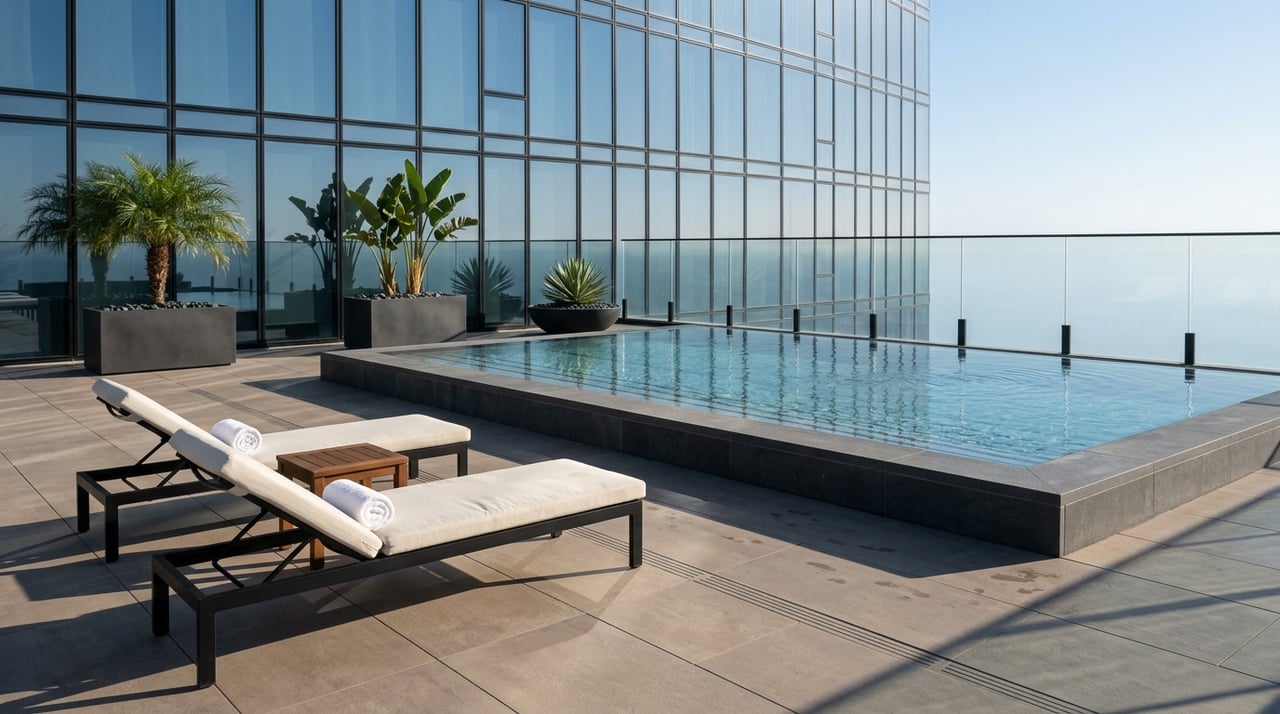
Recent South Florida luxury projects show this clearly. JLL highlighted developments with private marina access, rooftop infinity pools, and resort-style outdoor decks as central selling points. Pools now feel close to a baseline expectation in top-tier buildings, while rarer features like marina dockage create stronger differentiation.
That does not mean every waterfront-adjacent feature automatically boosts value. The question is whether the amenity creates a real extension of the Miami lifestyle. A private slip, resident beach setup, or well-designed outdoor deck with strong water views may matter more than a long list of indoor club spaces that see limited use.
Outdoor spaces buyers actually use
Outdoor living matters in Miami because it supports the lifestyle people come for in the first place. Buyers often respond well to amenities that make day-to-day living feel easier and more enjoyable, such as:
- Resort-style pools
- Thoughtful sun decks
- Outdoor kitchens or dining areas
- Private cabanas or shaded lounge areas
- Marina or boating access where available
The best outdoor amenities feel integrated into the building, not tacked on for marketing. If the space is attractive, functional, and easy to maintain, it is more likely to remain a selling point later.
Wellness amenities have become a serious value driver
Luxury buyers are paying more attention to wellness than they did a few years ago. Knight Frank’s 2025 branded-residence survey found that holistic wellness, longevity, and health-focused living are becoming central to luxury residential design.
In Miami, that has translated into deeper amenity programs. Instead of a basic gym and pool, many higher-end buildings now include fitness studios, wellness spas, indoor pools, dry saunas, steam spaces, and broader health-oriented facilities. These are not just extras anymore. In many buildings, they are part of the core value proposition.
What makes wellness amenities matter for resale
Not every wellness feature supports resale equally. Buyers tend to respond best when the wellness offering is both comprehensive and practical.
Features that may carry more weight include:
- A well-equipped fitness center
- Dedicated yoga, Pilates, or training studios
- Sauna and steam rooms
- Spa treatment or recovery spaces
- Indoor wellness areas that complement outdoor amenities
The real question is whether the wellness package feels useful enough to become part of daily life. A serious fitness center or thoughtfully designed spa suite may support resale more than a trendy feature that photographs well but sees little use.
Concierge and privacy often influence buyer decisions
In luxury condos, service can matter as much as square footage. For many Miami buyers, especially second-home and globally mobile buyers, convenience and discretion are a major part of the purchase decision.
Savills noted that branded residences appeal to time-conscious buyers because they offer brand confidence, higher service levels, and more seamless ownership. Concierge support and access to dedicated amenities can make the home easier to enjoy, especially for buyers who are not in residence full time.
Miami also stands out because of how much branded product it has. Savills reported that South Florida leads the region with 42 completed branded residence schemes, and Miami has more non-hotel branded residences than any other city. That concentration helps explain why buyers in this market often expect a stronger service layer.
The resale advantage of service
Service-driven buildings may hold appeal because they reduce friction. For many luxury buyers, the value is not just the amenity itself. It is the feeling that the building is professionally run, private, and easy to live in.
Amenities and services that may support that perception include:
- Full-service concierge
- Valet or arrival services where offered
- Strong privacy controls
- Resident-focused amenity access
- A service model designed for second-home ownership or lock-and-leave use
Knight Frank’s 2026 prime residential analysis also found that buyers are willing to pay premiums for top-tier service, privacy, and high-quality amenities. In practice, that means a refined service experience may be just as important as one more rooftop feature.
Flashy amenities are not always the best investment
A long amenity list can be impressive, but resale value depends on more than presentation. In Miami, operating quality matters. If the building cannot sustain the amenity package without excessive costs, the feature may become a drag on future saleability.
Savills noted that annual service charges on branded residences usually range from 0.5% to 2% of the purchase price. That does not mean higher fees are automatically a problem, but it does mean buyers and sellers should pay close attention to whether the costs feel justified by the experience.
An oversized amenity package can lose its shine if owners face heavy fees, weak reserve funding, or future assessments. Buyers today are often more sophisticated about looking past renderings and asking whether the building can maintain the promised lifestyle over time.
How to evaluate amenities before you buy
If you are comparing luxury condos in Miami, it helps to look at amenities through an operational lens. Public information can tell you a lot if you know what to ask.
Start with these four questions:
- Is the amenity resident-only or shared with hotel guests?
- Does it solve a daily-use need or is it mainly a visual selling tool?
- Can the building support the operating cost over time?
- Does the amenity fit the likely buyer profile of the tower, such as full-time owners, second-home users, or investors?
This approach helps you separate lasting value from short-term marketing. A building with a smaller but better-run amenity package may be more attractive at resale than one with an oversized list and unclear long-term costs.
Why Florida building rules matter too
In Florida, condo resale value is also shaped by building condition and financial planning. Under Florida Statute 553.899, buildings that are three habitable stories or more must complete milestone inspections at 30 years, or at 25 years in certain local conditions, including cases tied to salt-water proximity.
MIAMI Realtors has said the state’s newer condo regulations around inspections and adequate reserves should make buildings more resilient and financeable over time. For buyers, that means it is smart to consider not only the amenity package but also how the building is preparing for long-term upkeep. For sellers, a well-managed building with sound planning can become part of the value story.
What Miami buyers are really comparing
Many luxury buyers in Miami are not comparing one local tower against another in isolation. They may also be comparing Miami with New York, London, or other global markets. In that context, value is often about lifestyle quality per dollar, not just the number of perks on a brochure.
MIAMI Realtors, citing Knight Frank, noted that $1 million buys 58 square meters of prime property in Miami compared with 34 square meters in New York and London. That helps explain why buyers often look closely at service quality, privacy, and everyday usability. They want amenities that improve how the home lives, not just how it looks online.
For a Manhattan-based or global buyer considering Miami, this is especially relevant. A building that combines waterfront appeal, strong wellness spaces, and high-touch service may feel more compelling than a tower with a louder amenity list but less operational depth.
Amenities most likely to support resale
While no amenity guarantees future value, the Miami market data points to a few categories that appear most durable. The strongest candidates usually combine scarcity, daily usefulness, and sustainable operating costs.
The amenities most likely to support long-term desirability are often:
- Waterfront access or marina dockage
- Well-run pools and outdoor living spaces
- Meaningful wellness and fitness facilities
- Concierge-level service and privacy
- A building structure and budget that can support those features over time
That is the big takeaway for both buyers and sellers. In Miami luxury condos, a usable, well-managed amenity package often matters more than a dramatic one.
If you are evaluating a luxury condo in Miami, the smartest move is to look past the brochure and focus on what will still feel valuable years from now. For discreet guidance on Miami and cross-market luxury opportunities, connect with Lauren Mitinas-Kelly | Limitless LMK.
FAQs
Which Miami luxury condo amenities help resale value most?
- In Miami, amenities that often support resale best are waterfront access, marina or boating features, strong outdoor living areas, serious wellness and fitness spaces, concierge-level service, and privacy-focused operations.
Do rooftop pools help Miami condo resale value?
- Yes, rooftop or resort-style pools can help, but in top-tier Miami buildings they often feel like a baseline expectation rather than a rare differentiator.
Why does concierge service matter in Miami luxury condos?
- Concierge service can matter because many Miami buyers value convenience, privacy, and ease of ownership, especially in second-home or lock-and-leave settings.
How should buyers evaluate Miami condo amenity packages?
- Buyers should look at whether amenities are resident-only, useful in daily life, affordable for the building to maintain, and aligned with the likely ownership profile of the tower.
Do condo fees affect luxury condo resale in Miami?
- Yes, condo fees and service charges can affect resale because excessive operating costs may reduce saleability, especially if the amenity package does not justify the expense.
Do Florida condo rules affect Miami luxury condo resale?
- Yes, Florida milestone inspection and reserve requirements can affect how buyers view a building’s resilience, financeability, and long-term maintenance outlook.