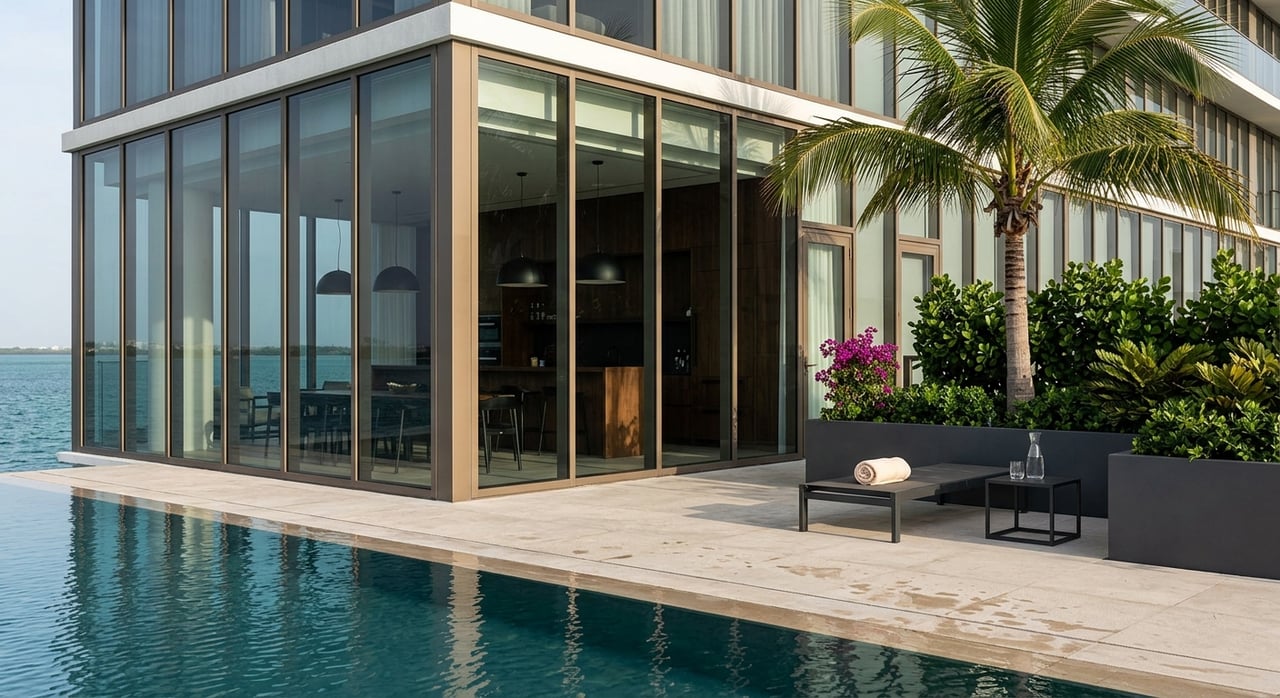
If you are used to comparing condos in Manhattan or along the Brooklyn waterfront, Miami can look simple at first glance: water, towers, sunshine, and more space for the money. In reality, Miami waterfront condo shopping works best when you treat it as a set of distinct micro-markets, each with its own lifestyle, pricing pattern, and due diligence demands. For NYC buyers considering a South Florida purchase, this guide will help you compare Brickell, Edgewater, and Miami Beach, and understand the building-level homework that matters before you move forward. Let’s dive in.
Why Miami Looks Different From NYC
For many New York buyers, the first surprise is value. According to MIAMI REALTORS, citing Knight Frank, $1 million buys about 58 square meters in Miami versus 34 square meters in New York. That does not mean every Miami condo is a bargain, but it does mean your budget may stretch into newer product, more interior space, or stronger amenity packages than you would expect in NYC.
At the same time, Miami-Dade is not a one-note waterfront market. MIAMI REALTORS reported that condo prices have stayed even or increased for 14 consecutive years, yet inventory reached about 14 months of supply in May 2025, which it described as a buyer’s market. For you, that creates an interesting mix: long-term price resilience paired with negotiating room in many buildings.
Compare Miami’s Three Main Waterfront Corridors
Brickell: The Closest Match to Manhattan
If you want the most familiar transition from New York, Brickell is often the first place to look. It is the most urban and transit-connected of the major waterfront-adjacent condo corridors, with Miami-Dade’s free Metromover serving downtown Miami, Omni, and Brickell seven days a week. The area also connects to The Underline’s Brickell Backyard, which links the Miami River area to Brickell station.
That transit framework helps explain why Brickell often feels like the closest Miami analogue to a dense city condo lifestyle. You get towers, walkability, and a year-round urban base rather than a pure resort environment. For many NYC buyers, that makes Brickell a natural first comparison point.
From a market standpoint, BHS’s Q4 2025 report put Brickell at a median condo sale price of $660,000, an average sale price of $821,989, 201 closings, and 17.0 months of inventory. One- and two-bedroom units made up most sales, which also lines up with the area’s urban profile.
Who Brickell may suit best
- Buyers who want a full-time city base in Miami
- NYC owners looking for a familiar high-rise rhythm
- Purchasers who value transit access and centrality
- Those prioritizing one- or two-bedroom condo options
Edgewater: Bayfront Balance Near Downtown
Edgewater offers a different kind of waterfront appeal. It is more residential in feel, with a strong bayfront identity and easier access to open water views. Margaret Pace Park sits right on Biscayne Bay and provides waterfront trails, reinforcing the area’s outdoor, visually open character.
The city is also actively advancing flood-improvement work in Edgewater, including stormwater infrastructure and shoreline stabilization. That is not just a civic planning note. For a waterfront buyer, it is part of the practical context around resilience and long-term ownership.
BHS’s Q4 2025 report shows Edgewater with a median condo sale price of $657,500, an average sale price of $970,981, 86 closings, 132 days on market, and 18.28 months of inventory. The sales mix was broader than Brickell, with one-, two-, and three-bedroom units all playing a meaningful role.
For NYC buyers, Edgewater can appeal if you want bay views and high-rise living near downtown, but with a quieter residential tone than Brickell. It often feels less like a financial district extension and more like a bayfront home base.
Who Edgewater may suit best
- Buyers seeking bay views and a residential setting
- Those who want proximity to downtown without full urban intensity
- Purchasers comparing one-, two-, and three-bedroom layouts
- Owners looking for a quieter waterfront base
Miami Beach: Lifestyle and Second-Home Appeal
If Brickell feels most urban and Edgewater feels most bayfront residential, Miami Beach is the strongest lifestyle and second-home corridor of the three. The city highlights a nine-mile oceanfront Beachwalk and promotes the distinct character of the Miami Beach Architectural District. The setting is part of the purchase decision here in a way that is more pronounced than in many city-centered condo searches.
The second-home angle is backed by market data. MIAMI REALTORS reported that Miami Beach is the No. 2 largest vacation home market in the U.S., with 13,817 vacation homes representing 22% of housing stock. It also noted that across 25 South Florida vacation-home markets, 75% of sales were all-cash and 76% of condo and townhome sales were all-cash.
Elliman’s Q2 2025 Miami Beach and Barrier Islands report showed a median condo sale price of $635,000, an average sale price of $1,550,380, 739 closings, 121 days on market, and 19.2 months of supply. Pricing varied significantly by subarea, with South Beach at $450,000 median, Mid-Beach at $587,500, and North Beach at $427,500.
That spread matters. Miami Beach is not one uniform market. It ranges from historic, highly recognizable neighborhoods to more expensive barrier-island towers, so your search strategy should stay highly specific.
Who Miami Beach may suit best
- Buyers shopping for a second home or seasonal residence
- Purchasers focused on oceanfront lifestyle and leisure access
- Cash buyers looking at vacation-oriented ownership
- Those comfortable with wide price variation by submarket
A Quick Side-by-Side Comparison
| Corridor | Best fit for | Median condo price | Inventory / supply |
|---|---|---|---|
| Brickell | Urban lifestyle, transit, year-round city base | $660,000 | 17.0 months |
| Edgewater | Bayfront balance, quieter residential feel | $657,500 | 18.28 months |
| Miami Beach | Second-home and oceanfront lifestyle | $635,000 | 19.2 months |
What NYC Buyers Need to Underwrite Differently
The biggest adjustment for many New York buyers is this: in Miami waterfront condos, the building itself is part of the investment thesis. You are not only evaluating floor plan, views, and amenities. You are also evaluating inspection status, reserve funding, insurance posture, and possible future capital needs.
Under Florida law on milestone inspections, buildings that are three habitable stories or more must complete inspections based on statutory age triggers, and local enforcement agencies may require milestone inspections at 25 years in certain circumstances, including proximity to salt water. Residential condominium associations must also complete structural integrity reserve studies at least every 10 years, with specific deadlines applying to many associations.
That means due diligence in Miami often goes deeper than what some NYC buyers expect in a typical condo search. Reserve studies, inspection timing, and pending repairs are not side issues. They are core buying criteria.
Review Condo Documents Early
Florida also gives buyers specific document rights. Under Chapter 718 of the Florida Statutes, sellers must provide the declaration, bylaws, rules, budget, milestone-inspection summary if applicable, and the most recent SIRS, or a statement that none exists. If those disclosures are not delivered as required, the contract may be voidable.
For you, the practical lesson is simple: request and review the association package early. Waiting until late in the process can create avoidable risk, especially in older waterfront buildings.
Key items to review before signing
- Association budget
- Governing documents and rules
- Milestone-inspection status
- Most recent structural integrity reserve study
- Pending repairs or special assessments
- Association financing posture
Financing Can Narrow Your Options
If you plan to finance, start that conversation early. MIAMI REALTORS reported that as of June 2025, only 21 of 2,397 condominium buildings in Miami-Dade, Broward, and Palm Beach counties were FHA-approved. While many luxury buyers are not using FHA financing, the broader point remains important: not every building is equally financeable.
In practice, loan eligibility, lender comfort with the building, and association financials can all influence your buying path. If financing is part of your strategy, building selection should reflect that from the very beginning.
Flood and Insurance Matter More Here
Waterfront ownership in South Florida requires a closer look at risk than many NYC buyers are used to. FEMA states that flood insurance is available even outside high-risk areas, and that homes and businesses in high-risk flood areas with government-backed mortgages are required to have flood insurance. FEMA’s Flood Map Service Center is the official source for flood-hazard mapping.
For a Miami waterfront condo purchase, it is wise to review flood zone context, windstorm coverage, deductibles, and the HOA’s insurance posture as part of your underwriting. On the waterfront, those details can affect both ownership cost and long-term comfort with the asset.
A Simple Decision Framework
If you are comparing Miami through a New York lens, a simple framework can help narrow the field.
Choose Brickell if you want:
- The closest Miami version of a Manhattan-style condo lifestyle
- Transit access and a central urban setting
- A year-round city residence
Choose Edgewater if you want:
- Bay views and a more residential atmosphere
- High-rise living near downtown
- A quieter base with strong waterfront character
Choose Miami Beach if you want:
- A second home or lifestyle purchase
- Oceanfront access and vacation-market energy
- A corridor where submarket selection is especially important
The Bottom Line for NYC Buyers
Miami can offer more space, newer inventory, and a different style of waterfront living than many buyers find in New York at similar price points. But the smartest comparisons go beyond headline pricing. You need to match your lifestyle goals to the right corridor and pair that with serious building-level due diligence.
For some buyers, Brickell will feel like the easiest extension of a New York routine. For others, Edgewater offers a better blend of skyline access and bayfront calm, while Miami Beach fits a second-home or lifestyle-first purchase. If you want a strategic, discreet advisor who understands how Manhattan buyers evaluate real estate across markets, connect with Lauren Mitinas-Kelly | Limitless LMK to explore your next move.
FAQs
How does Miami condo value compare with New York for waterfront buyers?
- According to MIAMI REALTORS citing Knight Frank, $1 million buys about 58 square meters in Miami versus 34 square meters in New York, so your budget may stretch further in Miami.
What Miami area feels most familiar to NYC condo buyers?
- Brickell is generally the closest match for buyers who want a dense, urban, transit-linked condo lifestyle.
What makes Edgewater different from Brickell for Miami condo buyers?
- Edgewater is more bayfront residential in feel, with waterfront park access, a broader unit mix, and a quieter atmosphere near downtown.
Why do Miami Beach condos appeal to second-home buyers?
- Miami Beach has the strongest vacation and lifestyle identity of the three corridors, supported by oceanfront amenities, second-home demand, and high levels of cash purchasing.
What condo documents should Miami buyers review before signing?
- Buyers should review the association’s governing documents, budget, milestone-inspection summary if applicable, and the most recent structural integrity reserve study or a statement that none exists.
Why is condo due diligence more important in Miami waterfront buildings?
- Florida’s inspection, reserve-study, flood, and insurance considerations make building health, reserve funding, and repair history essential parts of the buying decision.
How can financing affect a Miami condo search?
- Financing can narrow your choices because not all condo buildings meet lender or program requirements, so loan eligibility should be checked early in the process.
What insurance and flood questions should Miami waterfront condo buyers ask?
- Buyers should review flood zone context, possible flood insurance requirements, windstorm coverage, deductibles, and the HOA’s overall insurance posture.