If you have ever wondered why a West Village townhouse feels so different from almost any other home in Manhattan, the answer starts before you even step inside. Here, ownership is tied to intimate blocks, landmarked facades, and a streetscape that still carries the shape of old New York. If you are considering this kind of purchase, it helps to know what daily life, upkeep, and decision-making can really look like. Let’s dive in.
A West Village townhouse feels distinct
Owning a West Village townhouse often feels closer to owning a private house than owning an apartment in a larger building. Most of the neighborhood’s townhouse stock is made up of rowhouses, not detached homes, which creates that classic close-knit streetscape while still offering a strong sense of privacy.
In the Greenwich Village Historic District, many of these homes reflect Federal and Greek Revival architecture. The district records describe brick-clad buildings that are typically three to three-and-a-half stories tall, often with stoops, basement windows, historic doors, transoms, and iron railings. Some homes retain many original details, while others have changed over time.
That mix is part of the appeal. The West Village does not read as perfectly uniform. Instead, it feels layered, with houses, former warehouses, stables, and factory-dwellings all contributing to a setting that is residential yet deeply connected to the neighborhood’s commercial and waterfront past.
Historic district ownership shapes decisions
One of the biggest practical differences in townhouse ownership here is oversight. The Greenwich Village Historic District was designated in 1969, and the 2006 extension added a waterfront portion of the neighborhood with buildings dating from 1819 to 2003.
If your townhouse is within a designated historic district, the Landmarks Preservation Commission plays an important role in what you can change on the exterior. The LPC must approve most alterations, reconstruction, demolition, and new construction affecting designated properties, and owners generally need permits for most types of exterior work.
That does not mean a townhouse is frozen in time. The LPC makes clear that landmark status does not stop a building or district from evolving. Ordinary repairs and most interior work are generally exempt, but exterior decisions usually require more planning, patience, and documentation than buyers coming from condo or co-op ownership may expect.
Privacy comes with more responsibility
A townhouse can offer a level of autonomy that many Manhattan buyers value. You are not simply managing a unit inside a larger building. You are typically responsible for the whole property, which can create a more private and independent ownership experience.
That privacy has a practical side. With a West Village townhouse, you are usually taking on more direct responsibility for maintenance, repairs, and long-term stewardship than you would in a condo or co-op. In a historic district, that responsibility also intersects with preservation review for exterior work.
For many buyers, this is the central tradeoff. You gain control, separation, and the feel of a full home, but you also take on a more hands-on role in caring for the property over time.
Outdoor space can feel like a luxury
One emotional difference between townhouse living and apartment living is the relationship to the street and, in some cases, to outdoor space. District records show houses with stoops, front yards, side yards, basement levels, and passages leading to rear yards.
Still, not every West Village townhouse includes a garden or meaningful yard. Some have only stoops or narrow exterior areas. If outdoor space is high on your list, it is important to evaluate each property individually rather than assume it comes with the townhouse format.
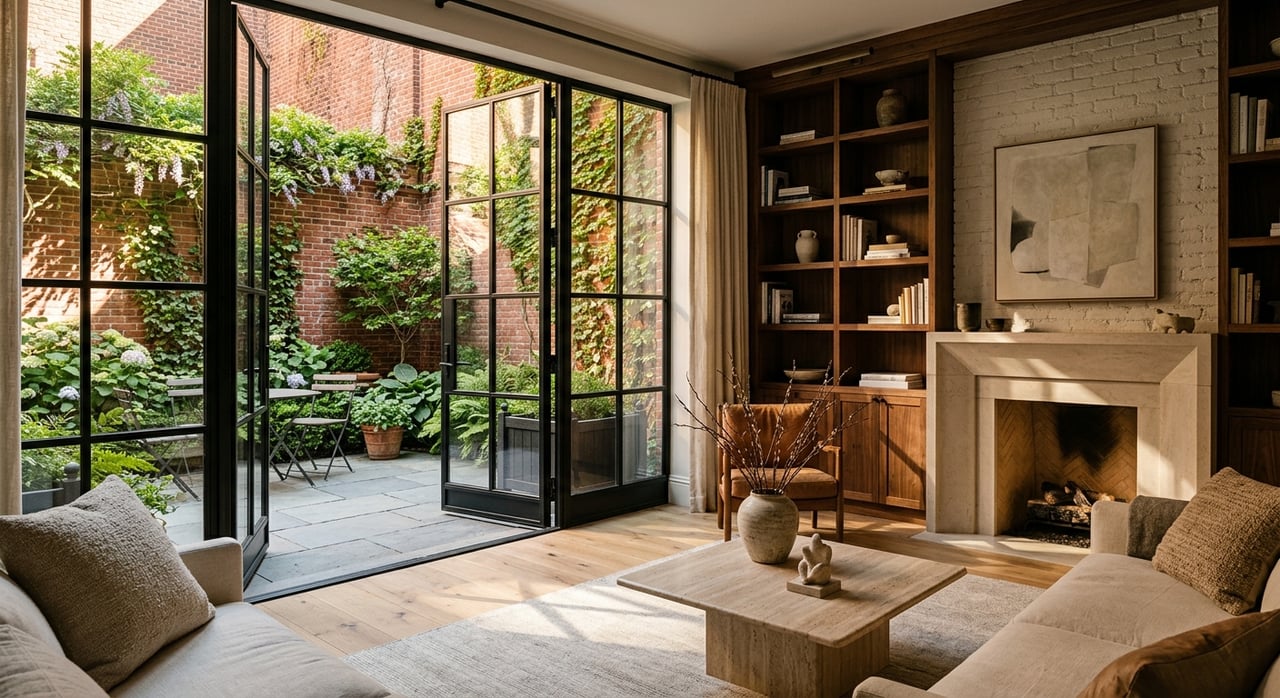
When a home does include a rear yard or other private exterior area, it can shift the entire feeling of the property. Instead of arriving through a shared lobby and hallway, you experience the home from the street inward, often with a stronger sense of separation from the city around you.
The neighborhood experience is part of ownership
A West Village townhouse is not only about the house itself. The neighborhood setting plays a major role in what ownership feels like day to day.
Hudson River Park strongly shapes the western edge of the area. Its Greenwich Village section runs from Canal Street to Gansevoort Street and includes an uninterrupted esplanade, views of Lower Manhattan and New York Harbor, lawns, Pier 45 at Christopher Street, Pier 46, and the Apple Garden. The park reports more than 17 million visits each year, which helps explain why the waterfront feels like part of everyday life rather than an occasional destination.
That matters when you live nearby. Morning walks, evening light by the river, and quick access to open space become part of your weekly rhythm in a way that is unusual for Manhattan townhouse ownership.
Quiet blocks meet neighborhood retail
Another part of the appeal is balance. The West Village can feel calm and residential on side streets, yet still place you close to neighborhood shopping and dining.
A city planning record describes the Bleecker Street corridor in the West Village as mostly high-end designer boutiques and small specialty food shops. It also notes that surrounding blocks are chiefly residential and served by amenities for the local population.
In practice, that often translates to a lifestyle many buyers want but rarely find in one place. You get low-rise streets, a recognizable residential scale, and easy access to cafés, shopping, and local services without losing the character of the neighborhood.
Transit stays close at hand
For all its intimate scale, the West Village remains well connected. Nearby subway access includes stations such as W 4-Washington Sq, 14 St, and Spring St, serving lines that help connect the neighborhood to the rest of Manhattan.
That combination is part of what makes the area so enduring. You can live on a block that feels tucked away, then reach major parts of the city with relative ease. For many townhouse buyers, that blend of privacy and access is hard to replicate elsewhere.
Why the West Village feels so special
The West Village stands out because so many elements work together at once. The architecture is historic, but the streetscape is not static. The blocks feel intimate, but the waterfront opens the neighborhood outward.
There is also a strong sense of continuity. The LPC describes the area as historically and aesthetically significant, and that continuity shows up in the facades, scale, and texture of everyday life. When you own a townhouse here, you are not just buying square footage. You are stepping into a setting with an identity that has been preserved, adapted, and lived in across generations.
Who this ownership style suits best
A West Village townhouse is often best suited to buyers who value privacy, architectural character, and direct control over their home. It can also appeal to those who want a more house-like experience in Manhattan, especially if they are drawn to stoops, full-building living, and a stronger connection to the street.
At the same time, it helps to be realistic. Historic district review, exterior permit requirements, and whole-house maintenance can make ownership more involved than many other property types. The right fit is often someone who appreciates both the romance and the responsibility.
If you are considering a West Village townhouse, a clear understanding of the building, the block, and the historic district context matters as much as the layout itself. That is where careful guidance can make a meaningful difference. If you are exploring townhouse opportunities in Manhattan and want discreet, tailored insight, Lauren Mitinas-Kelly | Limitless LMK can help you navigate the process with clarity and care.
FAQs
What is a West Village townhouse usually like?
- Most are rowhouses within a historic streetscape, often brick-clad and about three to three-and-a-half stories tall, with features like stoops, basement windows, transoms, and iron railings.
Do West Village townhouses all have gardens or yards?
- No. Some have front yards, side yards, passages to rear yards, or private rear outdoor space, but others may have only stoops or limited exterior areas.
Can you change the exterior of a West Village townhouse?
- Usually, exterior changes on designated properties within the historic district require review and approval from the Landmarks Preservation Commission.
Is West Village townhouse ownership more private than condo living?
- It often is, because you are usually owning and managing a whole house rather than a unit inside a shared building, though that also means more direct responsibility for upkeep.
What makes the West Village setting so appealing for townhouse owners?
- The neighborhood combines landmarked low-rise blocks, access to Hudson River Park, nearby retail and dining corridors, and strong transit connections in a setting with a distinct historic identity.