If you love East End living but feel like deer and ticks are running your yard, you are not alone. Many Suffolk County homeowners want a coastal‑appropriate landscape that looks refined, holds up to salt and wind, and still keeps deer pressure and tick exposure under control. With the right design moves, you can have both beauty and practicality. In this guide, you will learn how to plan plantings, discreet barriers, and maintenance that work for Hamptons conditions so your outdoor spaces stay enjoyable and low stress. Let’s dive in.
Know your East End conditions
Suffolk County sits in USDA Hardiness Zones 7a to 7b. Coastal microclimates soften winter lows, but exposed sites still see salt spray and strong winds. Most soils are sandy and well drained, which is great for some plants but means you must select species that tolerate low nutrients and drought.
White‑tailed deer are common throughout the Hamptons and browsing varies by neighborhood and proximity to woods. Ticks, including blacklegged ticks that can carry Lyme disease, are a recurring concern across Suffolk County. Your landscape choices influence both risks, since deer bring ticks into yards and ticks thrive in moist, shady leaf litter.
Before you design, confirm local rules. Towns and villages often limit fence height and front‑yard fencing. Very tall deer fences may require a permit or not be allowed. Review local guidance and avoid regulated invasive plants.
Build a resilient design framework
Map zones and uses
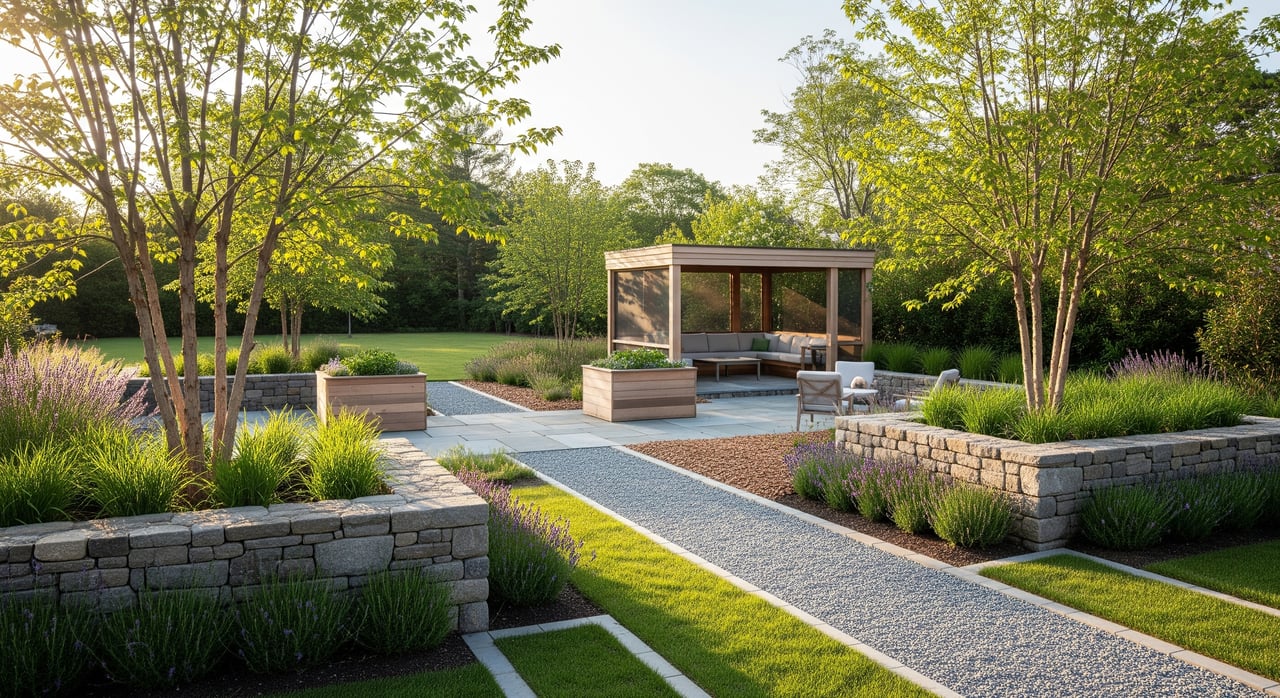
Start by drawing your property edges, woodlines, and high‑use areas like patios, pools, and play spaces. Place entertaining and daily living areas close to the house, where you can keep plantings tidy and low. Use more naturalistic plantings in outer zones with paths for access and maintenance.
Create clean edges and buffers
Ticks prefer moist leaf litter at the woodland edge. Design a 3 to 10 foot buffer of wood chips or gravel along woodlines to slow tick movement into lawns. Keep edges neat and avoid dense, low shrub layers that can shelter rodents near activity areas.
Use hardscape and structure
Raised beds, containers, and low seat walls can protect vulnerable plants. They also add structure and a finished look. Choose materials that weather well in salt air, and keep paths wide and sunlit to reduce humid microhabitats where ticks thrive.
Plan for wind, salt, and sun
Near shorelines or open exposures, pick salt‑tolerant species and group them to provide mutual protection. Place tender or high‑value ornamentals in the most sheltered courtyard zones. Prioritize irrigation strategies that support establishment, then taper to drought‑tolerant maintenance.
Choose plants that look great and hold up
Deer‑resistant means less preferred, not deer‑proof. Under heavy pressure, deer will sample many plants. Use a layered palette and place the most vulnerable plants where you can monitor them.
Trees and larger anchors
- Oaks (Quercus spp.): Durable anchors that support biodiversity and adapt to coastal conditions when tolerant species are chosen.
- Beach plum (Prunus maritima): A native that handles dunes and salt, useful as a small tree or large shrub.
- Hollies (Ilex spp., including Ilex verticillata): Provide structure and seasonal interest with berries in winter.
Shrubs that carry the garden
- Northern bayberry (Morella pensylvanica): Aromatic, salt‑tolerant, and typically avoided by deer.
- Mountain laurel (Kalmia latifolia): Evergreen and often less browsed, excellent for sheltered sites.
- Rhododendrons and azaleas: Many varieties perform well in protected areas and are often less preferred by deer.
Perennials and ornamental grasses
- Lavender, catmint, and sages (Lavandula, Nepeta, Salvia): Aromatic and usually avoided by deer, with long bloom and pollinator value.
- Coneflower and black‑eyed Susan (Echinacea, Rudbeckia): Native perennials that add color and texture.
- Switchgrass and little bluestem (Panicum virgatum, Schizachyrium scoparium): Clumping grasses that suit sandy soils and add winter structure.
Groundcovers and stabilizers
- Stonecrop (Sedum): Drought and salt tolerant, with low palatability.
- Beach plum and select roses: Prunus maritima is useful in coastal stabilization. Rosa rugosa is very salt tolerant but can be invasive in some areas, so check local rules first.
Placement tactics that work
- Keep tulips, hostas, fruit trees, and other deer favorites out of edge zones and away from woodlines.
- Use raised beds and central garden rooms for vulnerable showpieces.
- Try seasonal protections like netting over bulbs and new shrubs during high‑browsing periods.
Deer barriers that respect the view
Your goal is to deter deer while preserving a clean East End aesthetic. Combine structure, layout, and subtle barriers for the best results.
Low‑profile structural fences
Tall woven or field fencing at or near 8 feet is very effective when allowed, but it can be visually heavy and may need a permit. A thinner profile option is a powder‑coated high‑tensile wire system with a dark finish. Split‑rail with welded mesh inside can maintain a rural look while providing a real barrier.
Invisible and psychological deterrents
Where space allows, a double‑row low fence or two parallel barriers set 3 to 4 feet apart can stop deer from jumping. Electrified strands can be effective if installed correctly and in compliance with local code. To enhance a shorter fence, deer rollers at the top can reduce leverage for jumping.
Temporary protection for high‑risk seasons
Use garden netting, tree wraps, and wire cages to protect young plantings during peak browsing. Temporary lattice can shield focal shrubs without adding permanent visual weight. Remove seasonal barriers when pressure drops to keep the look open.
Make it blend in
Use dark finishes and materials that recess visually. Plant a hedge or layered shrub border in front of functional fencing to soften its presence. Place fences behind hedges or garden rooms so structure does the work without becoming the view.
Keep it continuous and maintained
Deer fences must be unbroken. Anchor the bottom to prevent push‑unders and install tight‑closing gates. Inspect seasonally for sagging mesh or gaps, and confirm ongoing compliance with local rules.
Integrated tick management that fits daily life
No single action eliminates ticks, but you can reduce encounters significantly with a combination of habitat edits, host measures, and targeted treatments.
Landscape tactics that lower tick habitat
- Create a 3 to 10 foot buffer of wood chips or gravel where lawn meets woods.
- Keep leaf litter, brush piles, and dense groundcovers away from patios, play areas, and doors.
- Mow lawns and thin dense shade around activity areas to lower humidity at ground level.
- Place play sets and lounges in sunny, open locations away from woodlines.
Host‑targeted measures
- Consider tick tubes that place permethrin‑treated cotton for mice to collect as nesting material. Results vary but can help reduce nymphal ticks when used correctly.
- Use deer fencing or other deer reduction strategies to limit adult tick hosts on your property. Larger community efforts deliver the biggest impact.
Targeted treatments and safety
Perimeter treatments along woodlines and shrub borders can reduce ticks when applied by licensed professionals. Discuss timing for late spring and early summer when nymphs are most active. Follow product labels and ask about pollinator protection and pet safety.
Personal and pet protection
Use EPA‑registered repellents like DEET or picaridin on exposed skin, and treat clothing or gear with permethrin as directed. Dry outdoor clothing on high heat after time in tick habitat. Keep pets on veterinarian‑recommended tick preventives and check them regularly.
Timing that matters
Cleanups in late winter and early spring set the stage for a safer season. Maintain buffers and personal protections through late spring and early summer. Reassess in late summer and fall to adjust strategies and prepare for the next year.
Seasonal plan and quick checklist
Use this simple framework to stay ahead of deer and ticks while keeping your property polished and low maintenance.
Step‑by‑step checklist
- Pre‑design: Confirm fence codes and permits. Map edges, woodlines, and daily use areas. Note soil, drainage, and salt exposure.
- Design: Place high‑use areas near the house. Specify deer‑less‑preferred, salt‑tolerant, and native species. Plan wood chip or gravel buffers. Add raised beds and discreet fencing where needed.
- Installation: Build fences and hardscape first. Plant in spring or early fall for best establishment in Suffolk County.
- Maintenance: Mow and tidy edges, remove leaf litter in early spring and fall, inspect fences annually, and review tick strategies each season.
Timeline for Suffolk County
- Late winter to early spring: Clean up leaf litter, prune, install fences and hardscape, and time tick measures for early nymph activity.
- Spring to early summer: Maintain buffers, keep lawn and beds tidy, and consider targeted perimeter treatments if risk is high.
- Late summer to fall: Inspect and restock tick tubes if used, repair fences, and complete new plantings while soil is warm.
Compliance, safety, and local help
Codes and permits vary by town and village across the East End. Confirm rules before installing tall fences or electrified systems. Some plants, especially non‑native invasives, may be discouraged or restricted, so check county or state guidance.
For plant lists, timing, and integrated pest guidance, consult Cornell Cooperative Extension of Suffolk County, the New York State Integrated Pest Management Program, the Suffolk County Department of Health Services, and the CDC for tick prevention recommendations. Licensed local landscape and pest management professionals can tailor strategies to your property’s microclimate and exposure.
Ready to make the most of your Hamptons property and outdoor living plan? For discreet guidance on selecting or selling a home that fits your lifestyle, reach out to the Limitless LMK Team to Arrange a Private Viewing.
FAQs
What makes Suffolk County landscaping different near the coast?
- Coastal sites face salt spray, wind, and sandy, low‑nutrient soils. Choose salt‑tolerant, drought‑adapted plants and add structure like raised beds and wind‑aware layouts.
How can a buffer reduce ticks in my yard?
- A 3 to 10 foot strip of wood chips or gravel at the woodline lowers humidity and creates a dry zone that discourages ticks from moving into lawns and play areas.
Are there plants deer will never eat on the East End?
- No. Deer‑resistant means less preferred. Under heavy pressure, deer may browse many species, so combine plant choice with layout and barriers.
Will a 6 foot fence stop deer in the Hamptons?
- Many deer can clear 6 feet. Taller continuous fencing, double low fences, or electrified strands can be more reliable where allowed by local code.
Can landscape changes alone prevent Lyme disease?
- Landscape changes lower risk but do not eliminate it. Combine buffers, tidy edges, host measures, and personal and pet protection for best results.