Is your ideal morning a barefoot beach walk at sunrise, or a quiet coffee on the dock as boats slip by? In Palm Beach and the surrounding West Palm Beach–Boca Raton–Delray Beach corridor, you can have either lifestyle. Choosing between oceanfront and Intracoastal living comes down to how you want to spend your days, what you value in a view, and how you think about long‑term ownership. In this guide, you’ll compare lifestyle tradeoffs, risk and insurance factors, maintenance costs, and resale dynamics, plus get practical checklists to make a confident choice. Let’s dive in.
Oceanfront living essentials
Oceanfront homes sit directly on the Atlantic-facing side of the barrier islands. In Palm Beach, that includes the Town of Palm Beach, Palm Beach Shores, and parts of Singer Island. You’ll find single-family beachfront estates, boutique buildings, and luxury oceanfront condos.
The draw is straightforward. You get direct beach access, sunrise ocean views, and a sense of privacy and prestige. If your day revolves around swimming, surfing, or simply stepping from your terrace to the sand, this setting is hard to match.
Oceanfront living brings unique considerations. Atlantic storms can drive direct wave action and beach erosion. Public beach use may create occasional activity and noise near access points. Many buildings have firm rules on renovations and rentals, so you’ll want to review condo or HOA guidelines early.
Intracoastal living essentials
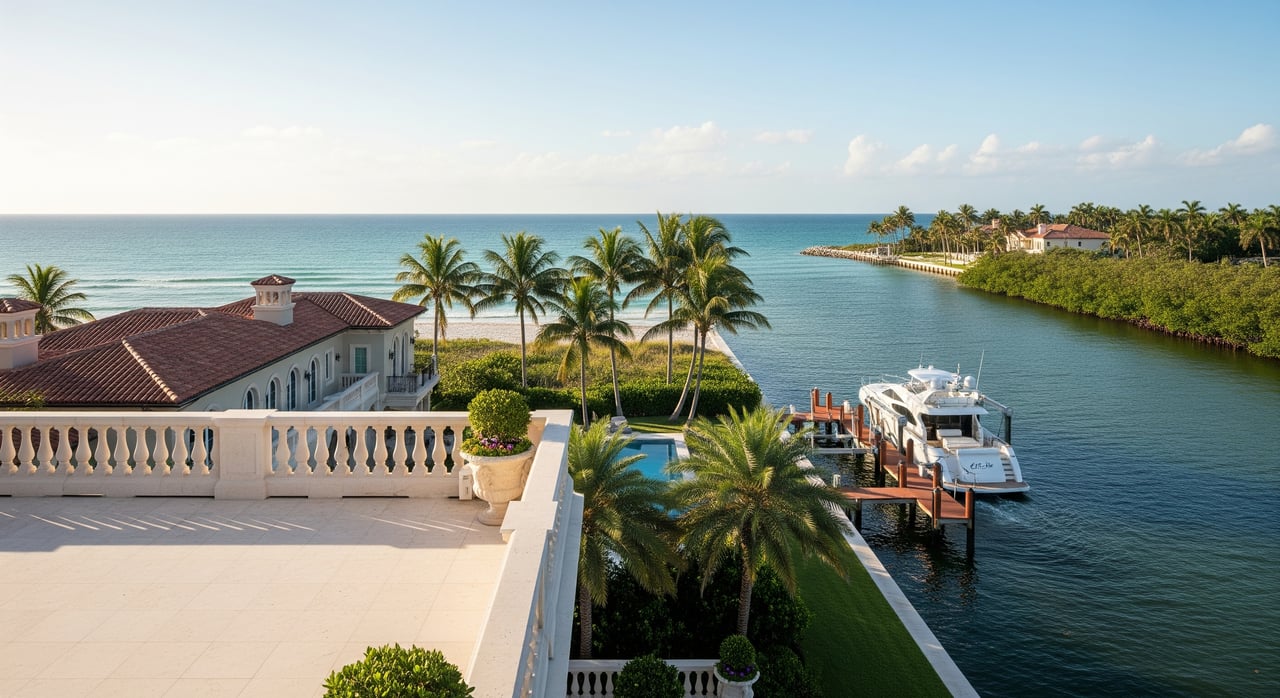
Intracoastal properties line the protected waterway between the mainland and the barrier islands. Options range from dock-equipped single-family homes to marinaside condos and Intracoastal-facing luxury buildings. You’ll see these on the island’s west side and across the mainland waterfronts of West Palm Beach, North Palm Beach, Riviera Beach, Boca Raton, and Delray Beach.
The lifestyle centers on boating and calm-water recreation. Paddleboarding, kayaking, and fishing are easier here, and many homes include private docks with access to ocean inlets. You are often closer to inland amenities and downtown districts.
Tradeoffs are different than the beach. You’ll enjoy water views with boat activity in the foreground. Expect some boat and marina noise at times, along with ongoing dock and seawall upkeep where applicable.
Pricing and demand drivers
Oceanfront properties generally command a price premium over comparable Intracoastal homes. Scarcity of oceanfront lots, direct beach access, and panoramic horizons support values and create trophy appeal for second-home and luxury buyers.
Intracoastal homes can be equally compelling, especially with deep-water docks and direct access to inlets. Inventory is typically broader, with more price points and lot configurations. Many full-time residents choose Intracoastal for flexible layouts, boating utility, and proximity to inland services.
If you are considering rental income, oceanfront condos and short-term rentals often attract higher nightly rates, while Intracoastal homes with docks command premiums for boating-focused guests. Keep in mind, local short-term rental rules and HOA policies vary by municipality and building. Confirm current regulations and association documents before modeling returns.
Risk and insurance overview
Flood and storm exposure
Oceanfront homes face the most direct wave action, overwash, and erosion during storms. Intracoastal properties are exposed to storm surge and tidal backflow, and canal systems can slow drainage after heavy rain. Both settings are coastal and affected by tides and sea-level rise. Local elevation and site conditions matter as much as the water body you face.
Insurance and market context
If a property is in a high-risk FEMA flood zone and you finance with a federally backed mortgage, flood insurance is typically required. Florida’s coastal environment also brings wind and homeowners insurance considerations. Premiums have been rising statewide, and some carriers have limited offerings. State-run Citizens Property Insurance serves as a backstop for eligible homes in some cases.
Before you make an offer, request current insurance estimates from a licensed agent, review elevation certificates and FEMA map designations, and ask for historical claims information from the seller.
Building codes and resiliency
Florida’s building code emphasizes wind-resistant construction and elevating critical systems. Look for wind-mitigation features that can help with premiums. On oceanfront property, Florida’s Coastal Construction Control Line (CCCL) rules affect what you can build or modify near the dune and beach. On Intracoastal homes, seawalls, docks, and lifts require proper permits and periodic maintenance. These resiliency features can protect your investment and influence holding costs.
Ownership and maintenance costs
Oceanfront care
Oceanfront homes see more salt spray, wind-driven sand, and corrosion. Expect more frequent exterior painting, roof and metal maintenance, and attention to HVAC and pool equipment. Beach renourishment projects and dune protection may also shape local conditions and responsibilities.
Intracoastal care
Intracoastal owners manage docks, lifts, seawalls, and canal maintenance issues where applicable. Costs can include dock repairs, occasional dredging, and permitting for replacements or expansions. Bulkheads and pilings should be inspected regularly.
Shared fundamentals
Across both settings, foundations on piles are common. Mechanical systems should be elevated where possible. Routine inspections and proactive upkeep reduce long-term costs and can improve insurance outcomes.
Lifestyle fit checklist
Choose oceanfront if you prioritize:
- Direct sand access and sunrise ocean views.
- Beach-based activities like swimming and surfing.
- A horizon view with minimal foreground activity.
- Trophy asset appeal and scarcity value.
Choose Intracoastal if you prioritize:
- Private dock access and calm-water recreation.
- Proximity to marinas, waterfront dining, and inland services.
- Water views with boat activity and evening sunsets over the waterway.
- Flexible lot options and a broader range of property types.
Buyer due diligence
Before you write an offer, verify:
- Elevation certificate, base flood elevation, and current FEMA flood zone.
- Any history of flooding or water intrusion claims.
- Condition and permits for seawalls, bulkheads, docks, and lifts; confirm riparian rights.
- Insurance quotes for flood and homeowners policies, plus any wind-mitigation credits.
- HOA or condo rules on rentals, renovations, and insurance; review financials and recent meeting minutes.
- Past permits and compliance with CCCL regulations where applicable.
- Local beach renourishment details and public easement status for oceanfront.
- Boat access specifics: water depth at the dock, bridge clearances, and channel history.
- Proximity to parks, marinas, downtown services, and emergency services.
Seller prep checklist
To position your property for a smooth sale, prepare:
- Elevation certificate, survey, FEMA documentation, and insurance history.
- Written disclosures on any past flood damage and repairs.
- For oceanfront homes: records on dune protection, beach renourishment participation, and any seawall work.
- For Intracoastal homes: dock permits, maintenance logs, and notes on easements or riparian issues.
Neighborhood snapshots
- Town of Palm Beach: Exclusive barrier-island address with historic oceanfront estates and luxury condos along both the Atlantic and the Intracoastal.
- Palm Beach Shores and Singer Island: Barrier-island pockets with more oceanfront and resort-style condo options.
- West Palm Beach and North Palm Beach: Mainland waterfront and canal neighborhoods with marinas and dock-friendly single-family homes.
- Boca Raton and Delray Beach: Intracoastal corridors with luxury condos, harbor areas, and single-family homes near inlets and downtown amenities.
Use current MLS reports and neighborhood-level comps when you are ready to evaluate specific properties. Inventory, elevation, and association rules can vary block by block.
Bringing it together
There is no one-size-fits-all answer. Oceanfront offers direct sand access, open horizons, and trophy scarcity. Intracoastal provides protected-water living with docks, boating utility, and closer connections to inland amenities. Your best choice comes from aligning lifestyle, risk tolerance, and ownership goals with the features of a specific address.
When you are ready to tour the right mix of properties and model total ownership costs, we will help you compare options with clear, data-informed guidance. Arrange a Private Viewing with Lauren Mitinas-Kelly | Limitless LMK to begin your Palm Beach waterfront search.
FAQs
Is oceanfront or Intracoastal a better long-term investment in Palm Beach?
- There is no universal winner. Oceanfront carries a scarcity premium and trophy appeal, while Intracoastal often delivers broader buyer utility with docks. Elevation, location, and resiliency features drive long-term value.
Will I be required to carry flood insurance on a Palm Beach waterfront home?
- If the home is in a high-risk FEMA flood zone and you use a federally backed mortgage, flood insurance is typically required. Many coastal owners carry it regardless; get quotes tied to elevation and structure details.
Are oceanfront homes at higher risk during storms than Intracoastal homes?
- Oceanfront properties face direct wave action and erosion, while Intracoastal homes face surge and tidal flooding. Elevation and site conditions are critical in both settings.
How important is having a dock on an Intracoastal property?
- For boating lifestyles, a dock is central to daily use and resale appeal. Confirm condition, permitted size, and water depth to ensure it matches your vessel and goals.
What rules affect short-term renting of waterfront homes in the area?
- Regulations vary by municipality and association. The Town of Palm Beach tends to be stricter, while other towns may allow rentals with permits and occupancy limits. Always verify current local ordinances and HOA rules.
What maintenance costs should I expect for seawalls and docks on Intracoastal homes?
- Seawalls, docks, and lifts require regular inspections and periodic repairs or replacement. Budget for upkeep and permitting, and review maintenance records before you purchase.